
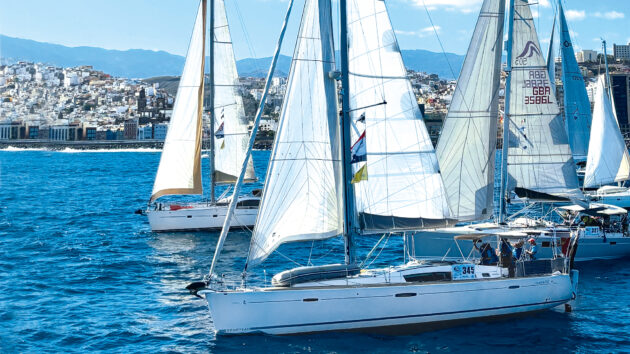
316 vs. 304 Stainless Steel in Marine Rigging
Stainless steel is widely used in marine rigging because it offers good strength, durability, and resistance to corrosion. It is commonly used in shackles, turnbuckles, wire ropes, fasteners, and other fittings that help secure masts, sails, and other boat components. However, not all stainless steel grades perform equally well in marine environments. Grades 304 and 316 are both widely used, but they differ in their ability to resist corrosion, especially when exposed to saltwater.
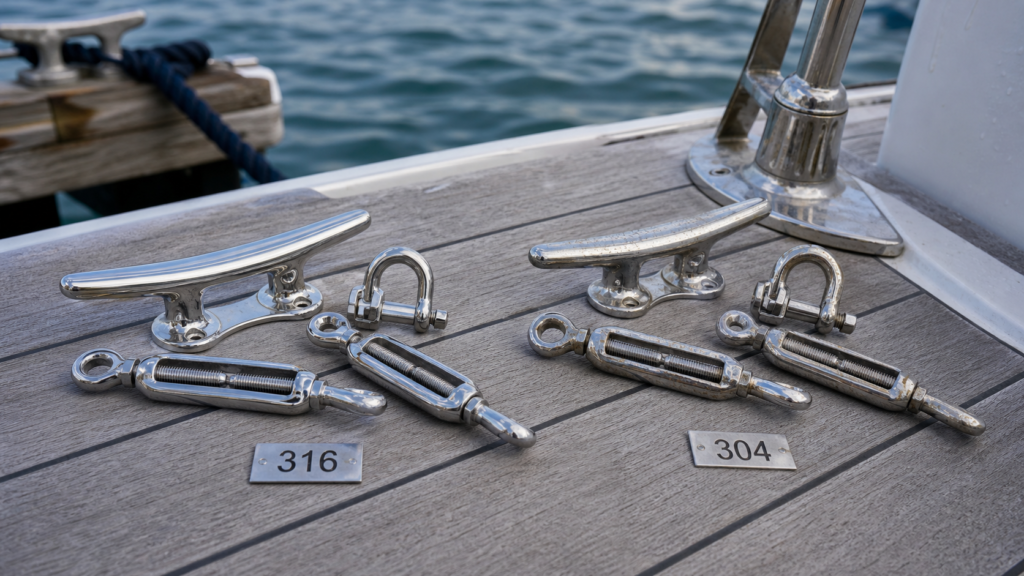
316 vs. 304 Stainless Steel in Marine Rigging
Choosing between 304 and 316 stainless steel affects the service life, maintenance needs, and reliability of marine rigging components. Grade 304 may perform well in freshwater and less aggressive environments, while grade 316 is generally preferred for saltwater applications because it contains molybdenum, which improves resistance to chloride-induced corrosion. However, the right choice also depends on the component's design, load requirements, exposure conditions, and maintenance routine. Understanding these differences helps manufacturers, boat owners, and marine engineers select suitable materials for reliable, long-lasting rigging systems.
Key Differences Between 304 and 316 Stainless Steel
The main difference between 304 and 316 stainless steel is their chemical composition and resistance to corrosion. Both grades contain chromium and nickel, which help protect the metal from rust. However, 316 stainless steel also contains molybdenum, which improves its resistance to corrosion caused by salt and other chlorides. This makes 316 a more suitable choice for many marine rigging applications.
Chemical Composition
The chemical composition of each grade affects how it performs in marine environments. The table below shows their typical composition ranges. Exact values may vary by product specification.
| Element | 304 Stainless Steel | 316 Stainless Steel |
|---|---|---|
| Chromium | 18% to 20% | 16% to 18% |
| Nickel | 8% to 10.5% | 10% to 14% |
| Molybdenum | Not intentionally added | 2% to 3% |
| Carbon | Up to 0.08% | Up to 0.08% |
Both grades contain chromium, which forms a thin, protective oxide layer on the surface. This layer helps prevent corrosion and can repair itself when exposed to oxygen. In 316 stainless steel, molybdenum improves resistance to pitting and crevice corrosion, which can occur when chlorides attack weak points in the protective layer. [1]
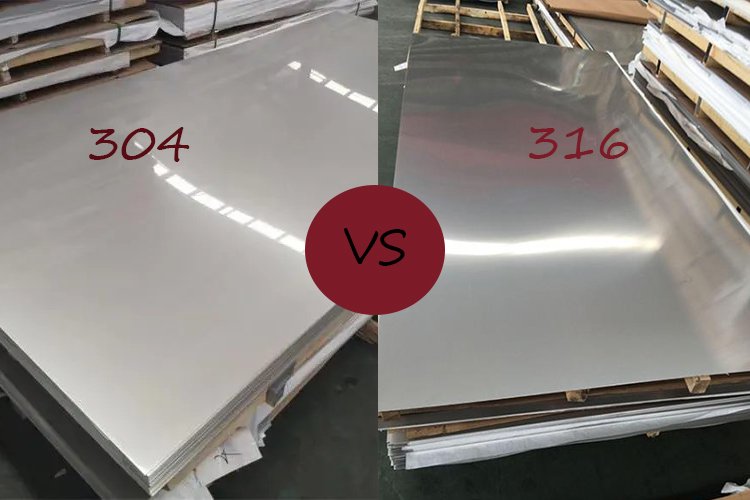
Strength, Durability, and Weldability
Both grades belong to the austenitic stainless steel family and offer good strength, toughness, and formability. Their basic mechanical properties are similar, so choosing 316 does not automatically mean a component will be stronger than one made from 304. The final strength depends on the product form, manufacturing process, and material condition.
| Property | 304 Stainless Steel | 316 Stainless Steel |
|---|---|---|
| Strength | Good | Similar in common conditions |
| Corrosion resistance | Good in mild environments | Better in chloride-rich environments |
| Weldability | Good | Good |
| Formability | Good | Good |
| Marine durability | Suitable for less aggressive exposure | Generally better for saltwater exposure |
Both grades can be welded using suitable methods. However, welding procedures and material selection matter because poor weld quality, heat effects, and surface contamination can increase the risk of corrosion. Low-carbon versions, such as 304L and 316L, are often preferred when welding-related corrosion is a concern.
Typical Applications
Grade 304 is commonly used for indoor equipment, food processing components, and general-purpose fittings where chloride exposure is limited. Grade 316 is often selected for coastal equipment, boat fittings, and marine fasteners because it offers better resistance to pitting and crevice corrosion.
For example, a stainless steel bracket used inside a dry cabin may perform well in 304. A turnbuckle exposed to salt spray on a sailboat is usually a better candidate for 316, provided its strength rating and design meet the required loads. Material selection should account for both the environment and the component's mechanical demands. [2]
Corrosion Resistance in Marine Environments
316 stainless steel generally resists corrosion better than 304 in marine environments, especially where saltwater and chloride exposure are common. Both grades form a protective oxide layer, but chlorides can damage this layer and cause localized corrosion. The risk depends on salt concentration, temperature, moisture, surface condition, and how often the component is cleaned.
Corrosion Resistance in Marine Riggi
How Saltwater Affects Stainless Steel
Seawater contains chloride ions that can weaken the protective layer on stainless steel. When this layer breaks down, corrosion may develop in small areas even if the rest of the surface looks clean.
Two common forms of corrosion are particularly important in marine rigging:
- Pitting corrosion: Small holes form on the metal surface when chlorides damage the protective layer. These pits can deepen over time and weaken a component.
- Crevice corrosion: Corrosion develops in narrow gaps where seawater becomes trapped, and oxygen levels fall. It can occur beneath washers, around threaded connections, and between tightly fitted parts.
These problems can be difficult to detect during routine checks because the damage may remain hidden beneath fittings or inside small gaps. Research on stainless steel corrosion shows that chloride concentration and local surface conditions can strongly affect the risk of pitting and crevice corrosion. [3]
304 vs. 316 in Coastal, Offshore, and Freshwater Conditions
The level of salt exposure has a direct effect on which grade is suitable. The following table provides general guidance for common marine environments.
| Environment | 304 Stainless Steel | 316 Stainless Steel |
|---|---|---|
| Freshwater | Usually suitable | Suitable |
| Coastal areas with salt spray | Higher risk of pitting | Generally more resistant |
| Offshore equipment | Often unsuitable for exposed fittings | Preferred for many applications, but not immune to corrosion |
| Components regularly splashed with seawater | High corrosion risk | Better resistance, but requires inspection |
| Dry areas with limited salt exposure | Often suitable | Suitable, but may cost more |
Research comparing 304 and 316 in a tropical marine environment found that both grades experienced atmospheric corrosion, although their corrosion behaviour differed. This shows why 316 should not be treated as completely corrosion-proof, particularly in areas with high salt deposits, humidity, and temperature changes. [4]
For example, a 304 fitting used inside a dry boat cabin may last for years with little corrosion. The same grade installed on an exposed deck near the sea may develop pits over time, especially if salt deposits remain on its surface.
How Surface Finish and Maintenance Affect Corrosion
The surface condition of stainless steel also affects its corrosion resistance. Scratches, rough areas, and contaminated surfaces can create sites where corrosion starts. A study of 304 stainless steel exposed to a marine atmosphere found that pitting was a major corrosion problem and that surface scratches could make it easier for pits to develop. [5]
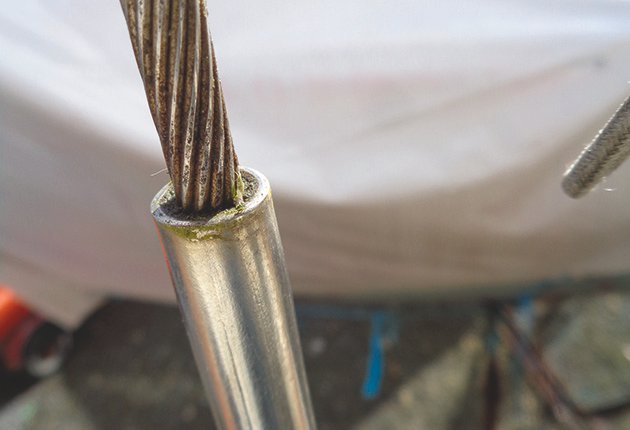
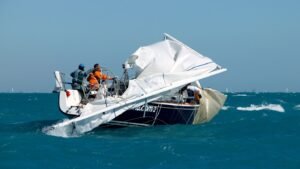
Corrosion that could cost you your rig
To reduce corrosion risks:
- Rinse off salt deposits: Wash exposed fittings with fresh water, especially after regular seawater exposure.
- Inspect joints and threads: Check beneath washers, around threaded connections, and inside narrow gaps where saltwater can collect.
- Keep surfaces clean: Remove dirt and deposits using suitable cleaning products that will not damage the protective layer.
- Check for pitting: Look for small holes, rough patches, or localised damage rather than relying only on visible rust.
These steps help extend the service life of both grades. However, maintenance cannot fully compensate for choosing a grade that is unsuitable for the environment.
Applications in Marine Rigging
316 stainless steel is generally preferred for marine rigging exposed to saltwater, while 304 may be suitable for components used in less corrosive conditions. However, corrosion resistance is only one part of material selection. Each component must also meet the required load rating, fatigue life, and design specifications to perform safely.
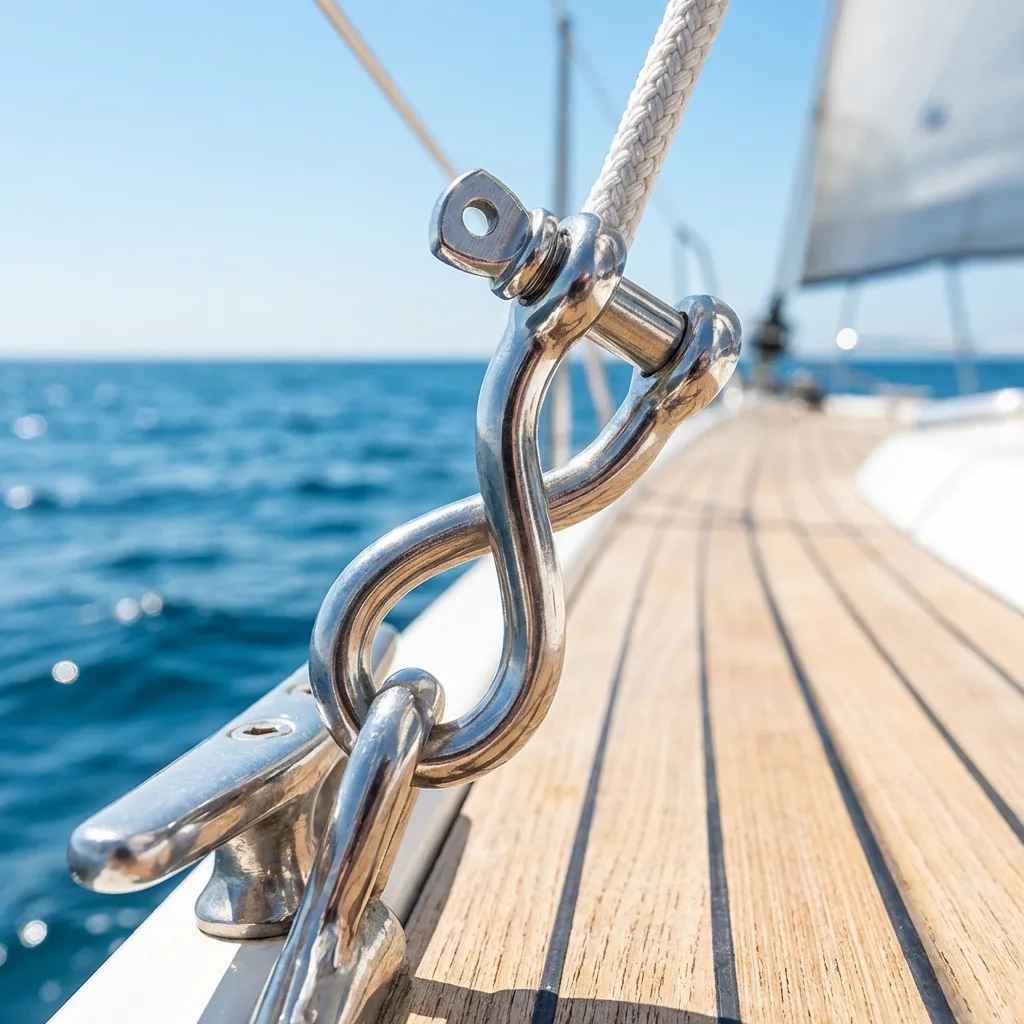
316 stainless steel for marine rigging
Common Marine Rigging Components
Stainless steel is used in many rigging components because it combines good mechanical properties with corrosion resistance. The best grade depends on where each part is installed and how it is used.
| Component | Typical use | Material selection |
|---|---|---|
| Shackles | Connect ropes, wires, and rigging parts | 316 is generally preferred for exposed marine use |
| Turnbuckles | Adjust tension in stays and rigging wires | 316 is a common choice for saltwater exposure |
| Wire ropes | Support masts and control loads | Select a marine-grade product based on load and exposure requirements |
| Fasteners | Secure brackets, fittings, and deck hardware | 316 is generally preferred for exposed fasteners |
| Deck fittings | Attach rigging to the boat structure | 316 often suits exposed saltwater conditions |
| Internal brackets and fittings | Support equipment in dry or sheltered areas | 304 may be suitable where chloride exposure is limited |
For yachts and sailing boats with specific design requirements, custom-made components can provide a better fit for the mast and rigging system. Material selection, dimensions, and load requirements should all match the intended application. Learn more about Custom-Made Parts for Yacht, Sailing Boat and Rowing Boat Masts & Rigging.
The grade alone does not confirm that a component is suitable for a particular task. For example, a 316 shackle with an insufficient working load limit may be unsafe even if it resists corrosion well. Components should be selected according to the manufacturer's specifications and the loads expected during use.
Load Requirements and Fatigue Resistance
Marine rigging components must withstand both steady loads and repeated forces caused by wind, waves, and vessel movement. These repeated forces can cause fatigue damage, especially around threads, bends, and connection points. Proper material selection, dimensional accuracy, and load testing are essential for reliable performance. For more details, see our guide to Testing Yacht Mast Components to Meet High Load Requirements: Materials, Tolerances, and Precision.
Research on steel wire ropes exposed to seawater shows that corrosion, friction, and repeated loading can combine to increase wear and wire breakage. This means that choosing a corrosion-resistant alloy is not enough to ensure long-term performance. [6]
When selecting rigging components, consider the following factors:
- Working load limit (WLL): Confirm that the component's rated working load meets the demands of the application.
- Fatigue resistance: Choose components designed to withstand repeated loading and movement.
- Manufacturing quality: Check material specifications, surface finish, weld quality, and product certification where required.
- Inspection requirements: Examine components regularly for cracks, deformation, broken wires, loose connections, and corrosion damage.
For example, a turnbuckle supporting a yacht's mast must withstand ongoing tension and changes in load as the boat moves. A suitable 316 stainless steel turnbuckle can offer good corrosion resistance, but it must also have the correct load rating and design for that application.
The same principle applies to wire ropes. Their performance depends on wire construction, manufacturing quality, loading conditions, and exposure to seawater. Research on stainless steel mooring ropes has also shown that products made from the same nominal alloy can differ in their corrosion behaviour because of differences in manufacturing and material structure. [7]
Cost, Maintenance, and Material Selection
316 stainless steel usually costs more than 304, but it can offer better long-term value for marine rigging exposed to saltwater. Its improved resistance to chloride corrosion can reduce the risk of early replacement and corrosion-related maintenance. However, the best choice depends on the operating environment, expected service life, component cost, and inspection needs.
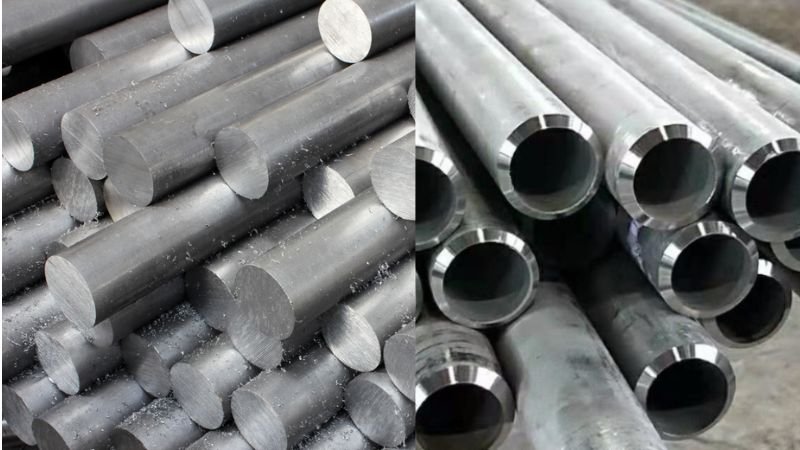
304 Stainless Steel vs. 316 Stainless Steel
Initial Cost vs. Long-Term Cost
The purchase price is only one part of the total cost of a rigging component. A cheaper fitting may need more frequent cleaning, inspection, or replacement if it corrodes quickly in its operating environment.
| Cost factor | 304 Stainless Steel | 316 Stainless Steel |
|---|---|---|
| Initial purchase price | Usually lower | Usually higher |
| Resistance to saltwater corrosion | Lower | Higher |
| Maintenance in exposed marine conditions | May require closer attention | Often less vulnerable to chloride corrosion |
| Replacement risk in saltwater | Generally higher | Generally lower, depending on conditions |
| Suitability for long-term coastal use | Limited in highly exposed areas | Usually preferred |
For example, using 304 fasteners on an exposed deck may reduce the initial purchase cost. However, if they develop pitting and need early replacement, the savings may disappear. Choosing 316 from the start can be more economical when the fittings face regular saltwater exposure.
The difference is not the same for every project. Prices vary by product size, grade, manufacturing method, and supplier. Compare the cost of components that meet the same load and quality requirements rather than comparing material prices alone.
Maintenance and Replacement Costs
Corrosion can increase maintenance costs by making components harder to inspect, loosen, adjust, or remove. In severe cases, damaged fittings may need urgent replacement, causing downtime and extra labour costs.
316 can reduce some of these risks, but it still needs proper care. Salt deposits, trapped moisture, surface contamination, and poor drainage can cause corrosion even in this grade. Regular freshwater rinsing and inspection remain important for exposed rigging.
Galvanic Corrosion Between Dissimilar Metals
Galvanic corrosion can occur when two different metals are electrically connected in the presence of an electrolyte, such as seawater. One metal may corrode faster while the other is protected. The risk depends on the metals involved, their relative surface areas, and the surrounding conditions. [8]
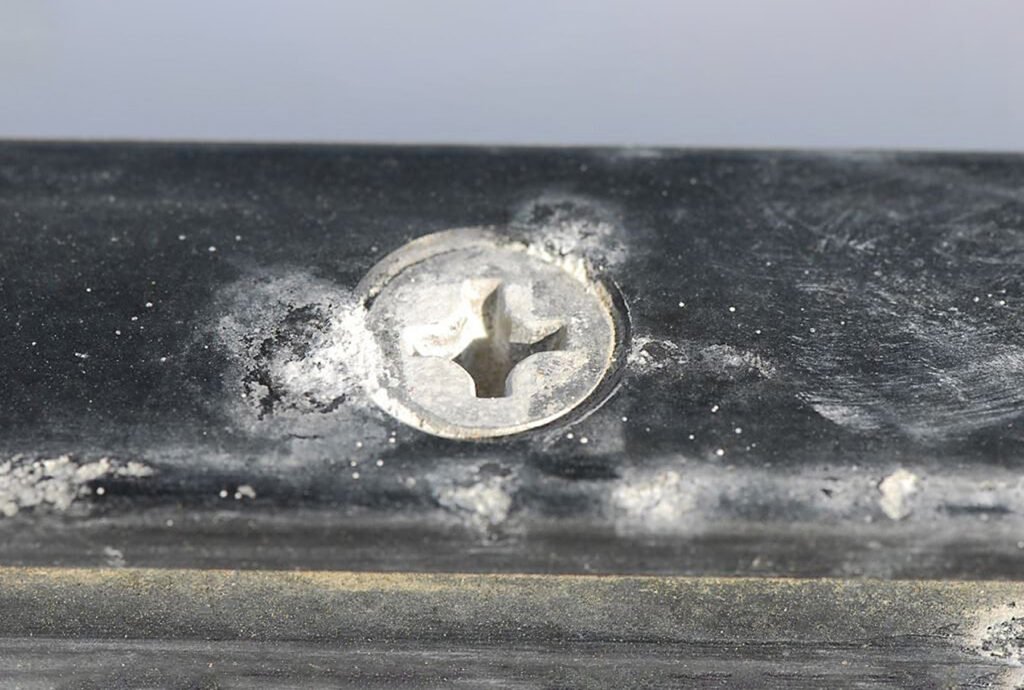
In marine rigging, this can become a concern when stainless steel fittings contact aluminium, carbon steel, or other metals. For example, a stainless steel fitting attached directly to an aluminium mast may contribute to corrosion of the aluminium if seawater creates a conductive path between them.
To reduce this risk:
- Use suitable insulating materials: Non-conductive washers or sleeves can help prevent direct electrical contact between dissimilar metals.
- Protect exposed surfaces: Suitable coatings can reduce contact between the metal and seawater.
- Prevent water from collecting: Good drainage and regular cleaning reduce the time that salty moisture remains around connections.
- Follow the manufacturer's guidance: Use compatible materials and approved installation methods for the specific rigging system.
These measures must suit the component's mechanical requirements. Insulating materials, for example, should not weaken a load-bearing connection or interfere with its secure fit.
How to Choose Between 304 and 316 Stainless Steel
The best grade depends on the exposure conditions, expected service life, and demands placed on the component. Use the following points as a practical guide.
- Choose 304 for sheltered applications: It may be suitable for indoor equipment, dry storage areas, and fittings exposed to little chloride contamination.
- Choose 316 for exposed marine fittings: It is generally preferred for deck hardware, shackles, turnbuckles, and fasteners exposed to salt spray or seawater.
- Consider the full service life: Compare purchase price, maintenance needs, replacement frequency, and the cost of equipment downtime.
- Check the component specifications: Confirm that the material grade, working load limit, and product design meet the requirements of the application.
- Plan regular inspections: Look for pitting, cracks, deformation, loose fasteners, and other signs of damage.
Research on galvanic corrosion in seawater confirms that contact between dissimilar metals can affect corrosion behaviour, so material compatibility should be considered alongside the choice of stainless steel grade. [9]
Ultimately, 316 is often the better investment for saltwater-exposed rigging, but it is not immune to corrosion. The safest and most cost-effective choice combines a suitable material grade with sound component design, proper installation, and regular inspection.
Conclusion
316 stainless steel is generally the better choice for marine rigging exposed to saltwater because its molybdenum content improves resistance to pitting and crevice corrosion. In comparison, 304 stainless steel is often suitable for sheltered areas and applications with limited salt exposure. Although 316 usually costs more, its improved corrosion resistance can reduce maintenance needs and replacement costs over time. However, neither grade is completely resistant to corrosion, particularly when salt deposits build up or moisture becomes trapped around fittings.
Choosing the right grade requires more than comparing corrosion resistance and price. Marine rigging components must also meet the required load ratings, fatigue demands, and manufacturing standards. Proper installation, compatible materials, regular cleaning, and routine inspections are essential for long-term performance. By matching the stainless steel grade to the operating environment and the component's intended use, boat owners and marine engineers can improve rigging reliability, control maintenance costs, and extend service life.
References
Comparison of 304 or 316 and 304L or 316L type compositions and effect on corrosion resistance – British Stainless Steel Association. (n.d.). https://bssa.org.uk/bssa_articles/2-comparison-of-304-or-316-and-304l-or-316l-type-compositions-and-effect-on-corrosion-resistance/
Francis, R. (1994). Galvanic corrosion of high alloy stainless steels in sea water. British Corrosion Journal, 29(1), 53–57. https://doi.org/10.1179/000705994798268033
Linhardt, P., Biezma, M. V., Haubner, R., Schuster, R., & Wojcik, T. (2023). Hollow wire corrosion of stainless steel ropes in a marine mooring system and its relation to microstructure. Materials and Corrosion, 74(6), 818–830. https://doi.org/10.1002/maco.202213699
Luo, H., Li, X. G., Dong, C. F., & Xiao, K. (2013). Degradation of austenite stainless steel by atmospheric exposure in tropical marine environment. Corrosion Engineering Science and Technology the International Journal of Corrosion Processes and Corrosion Control, 48(3), 221–229. https://doi.org/10.1179/1743278212y.0000000070
Okonkwo, B. O., Li, Z., Li, L., Chen, Y., Li, J., You, W., Zhang, Z., Wang, J., & Han, E. (2025). Multifaceted study of the galvanic corrosion behaviour of titanium-TC4 and 304 stainless steel dissimilar metals couple in deep-sea environment. Electrochimica Acta, 517, 145753. https://doi.org/10.1016/j.electacta.2025.145753
Pardo, A., Merino, M., Coy, A., Viejo, F., Arrabal, R., & Matykina, E. (2008). Pitting corrosion behaviour of austenitic stainless steels – combining effects of Mn and Mo additions. Corrosion Science, 50(6), 1796–1806. https://doi.org/10.1016/j.corsci.2008.04.005
Shorrab, Y., & Lillard, R. S. (2026). Potential and chloride concentration as thresholds for crevice corrosion initiation in SS 316L. Journal of the Electrochemical Society, 173(5), 051504. https://doi.org/10.1149/1945-7111/ae4b72
Wang, D., Wang, B., Ge, S., Wu, K., Chong, H., Zhang, D., Xie, G., Chen, J., Zhang, C., Deng, H., Zhang, J., & Wang, C. (2024). Effects of fatigue load characteristics on bending tribo-corrosion-fatigue damage of steel wire ropes in seawater and pure water. Tribology International, 201, 110201. https://doi.org/10.1016/j.triboint.2024.110201